How to Store Fresh Produce Longer and Waste Less in a Tiny Fridge
Let me guess. You walk into the store starving. Big mistake. Forty minutes later, you’re hauling two bags of spinach and a squash the size of your head back to your fifth-floor walk-up. Here’s the thing about a tiny fridge: it has zero mercy. If you cram it full at 2 p.m. on Sunday, by Thursday it’s a compost bin with a lightbulb. The fix? Shop like you have a vendetta against waste. Only buy what you can physically see fitting on one shelf. Think weekly, not monthly. And for the love of all that is holy, stop convincing yourself you’ll meal-prep four pounds of kale. You won’t. You never do.
Master the Art of the Fridge Tetris
Vertical space is your best friend. Actually, it’s your only friend. Those flat crisper drawers? They’re a trap. They bury your broccoli under a pile of condiment packets from 2021. My move is simple: clear, stackable bins. Put your berries in one, your herbs in another. You see everything. Nothing rots in secret. And here’s a pro tip for tiny fridge organization: the middle shelf is the coldest spot. That’s where your leafy greens live. The door? That’s for acid. Hot sauce, pickles, mustard. They can handle the temperature swings. Your delicate spinach cannot. Stop torturing it.
Stop Washing Everything the Second You Get Home
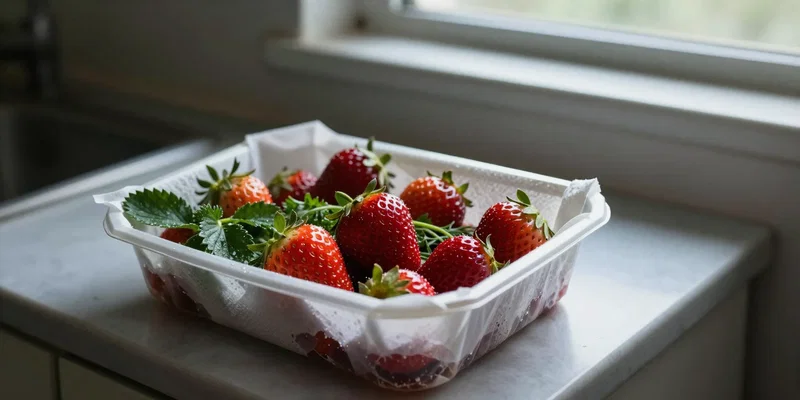
I know it feels productive. You’re unpacking groceries, you’ve got a podcast on, and you think, “I’ll just wash all this now and save time later.” No. You just signed a death warrant for your lettuce. Moisture is the enemy of longevity. Those droplets trapped in a plastic bag create a swamp. A swamp where good intentions go to die. To store produce longer, keep it dry. Damp? Pat it bone-dry with a paper towel. Then wrap it in a dry one. Better yet, invest in a few mesh or perforated bags. They let your veggies breathe instead of stewing in their own condensation. Your cilantro will thank you. Well, it would if it could talk before you inevitably let it turn to sludge.
Hack the Ethylene Gas Problem
Fruits are drama queens. Apples, bananas, avocados—they all pump out ethylene gas like it’s their job. And it basically is. That gas ripens everything around it, sometimes way too fast. So if you’re serious about food waste prevention, you have to separate the bullies from the victims. Keep your apples in a bowl on the counter, away from the victims in the fridge. And get yourself an ethylene absorber. It’s a little packet, looks like a scam, but it works. Toss one in your crisper drawer and suddenly your peppers last a week longer. Magic? No. Just basic science that nobody bothered to tell us. This is one of those apartment kitchen tips that costs three dollars and saves you thirty.
Herbs Are Not Flowers, Stop Treating Them Like They Are
Okay, this one drives me up a wall. You buy a beautiful bunch of cilantro. You get home. You shove it in the produce drawer in the plastic clamshell. Three days later, it’s black slime. Here’s the play: treat your herbs like a casual bouquet. Snip the ends. Put them in a jar with an inch of water. Cover the tops loosely with a plastic bag. Boom. Fresh herbs for two weeks. Basil goes on the counter, though. Cold turns it black faster than a bad joke at a funeral. Rosemary and thyme? Those soldiers are fine in the fridge, loosely wrapped. Stop letting your ten-dollar organic herbs turn into a science experiment.
Freeze What You Know You Won’t Eat
This isn’t a defeat. It’s a tactical retreat. That half onion? Dice it, bag it, freeze it. Those bananas turning spotty? Peel them, chunk them up, and throw them in the freezer for smoothies. Bread? Sliced, frozen, toasted straight from the ice. It’s honestly better that way. The biggest lie we tell ourselves is that we’ll “use it up tomorrow.” You won’t. The freezer removes the deadline. It hits pause on the rot. Just label your bags. “Mystery red sauce” from three months ago helps nobody. Trust me, Future You is already dealing with enough without playing freezer roulette.